HomeSolutionsElectric vehicle fleet solutions

Electric vehicle fleet solutions

Get better visibility of your EVs

Review detailed data from your electric vehicles (EVs) and plug-in hybrid electric vehicles (PHEVs) to help improve sustainability efforts, worker productivity and your bottom line. Monitor your mixed fleet vehicles together in one place.
vzc ev suitability laptop us

EV suitability tool

Purchase EVs with confidence

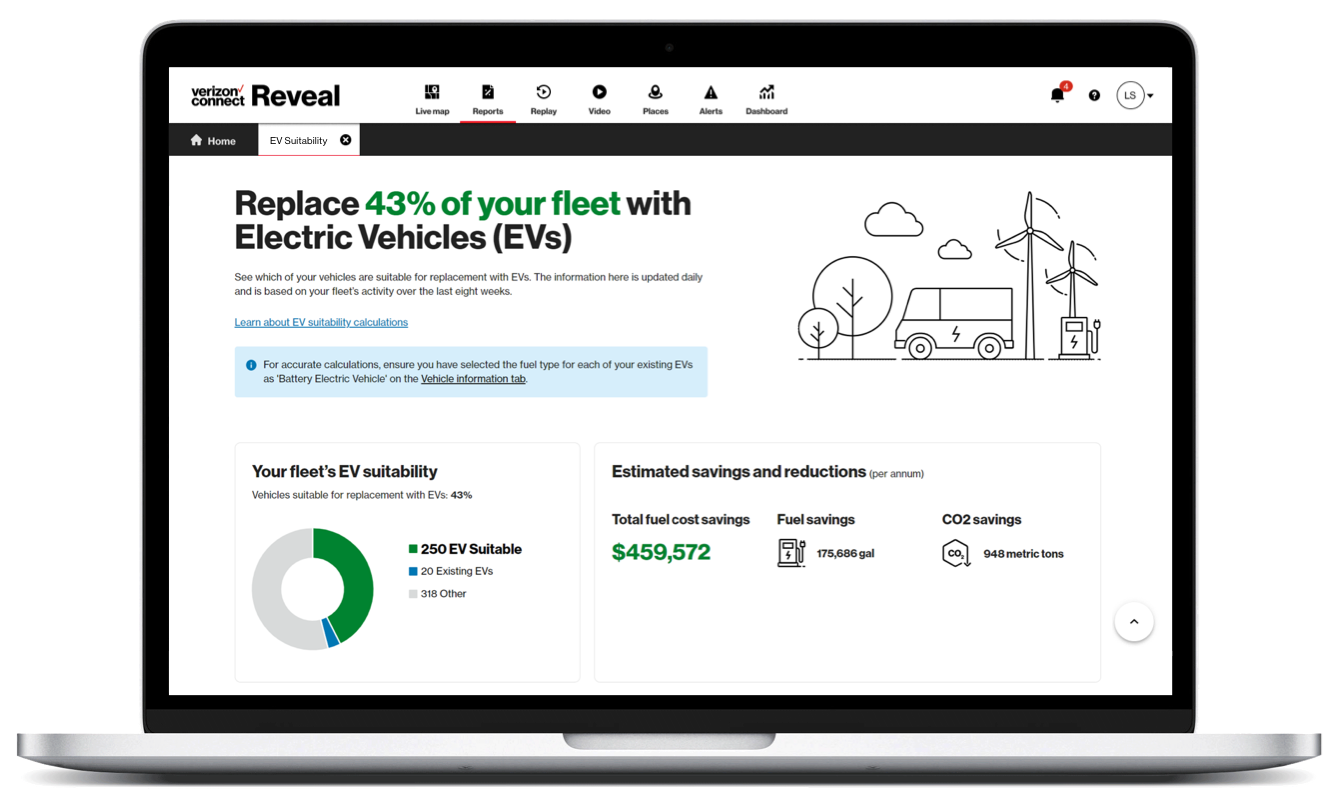
Simplify fleet electrification by using real route history to identify your highest-ROI vehicle candidates and make confident capital investments.

  • Identify exact light- and medium-duty vehicles ready for an immediate EV replacement based on actual usage
  • Project annual fuel savings and CO₂ reductions before making major capital purchase commitments
  • Match prospective EV range directly to historical daily routes to verify operational needs are met

Those with GPS fleet tracking:

35%

Improved fleet visibility of EV vehicles

28%

Improved sustainability

21%

Improved battery status visibility

ev battery level

Mixed-fleet live tracking

Know which EVs are charged

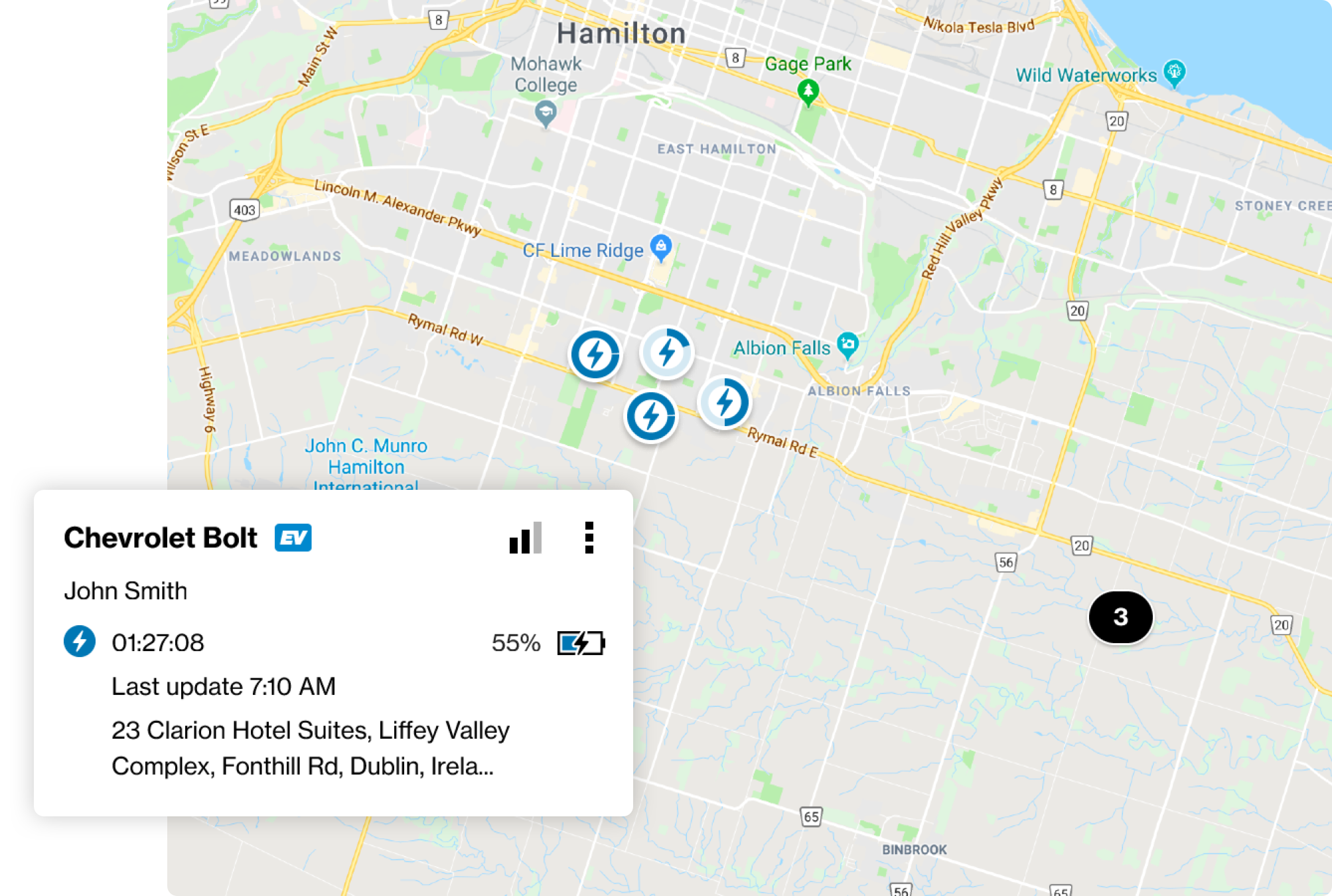
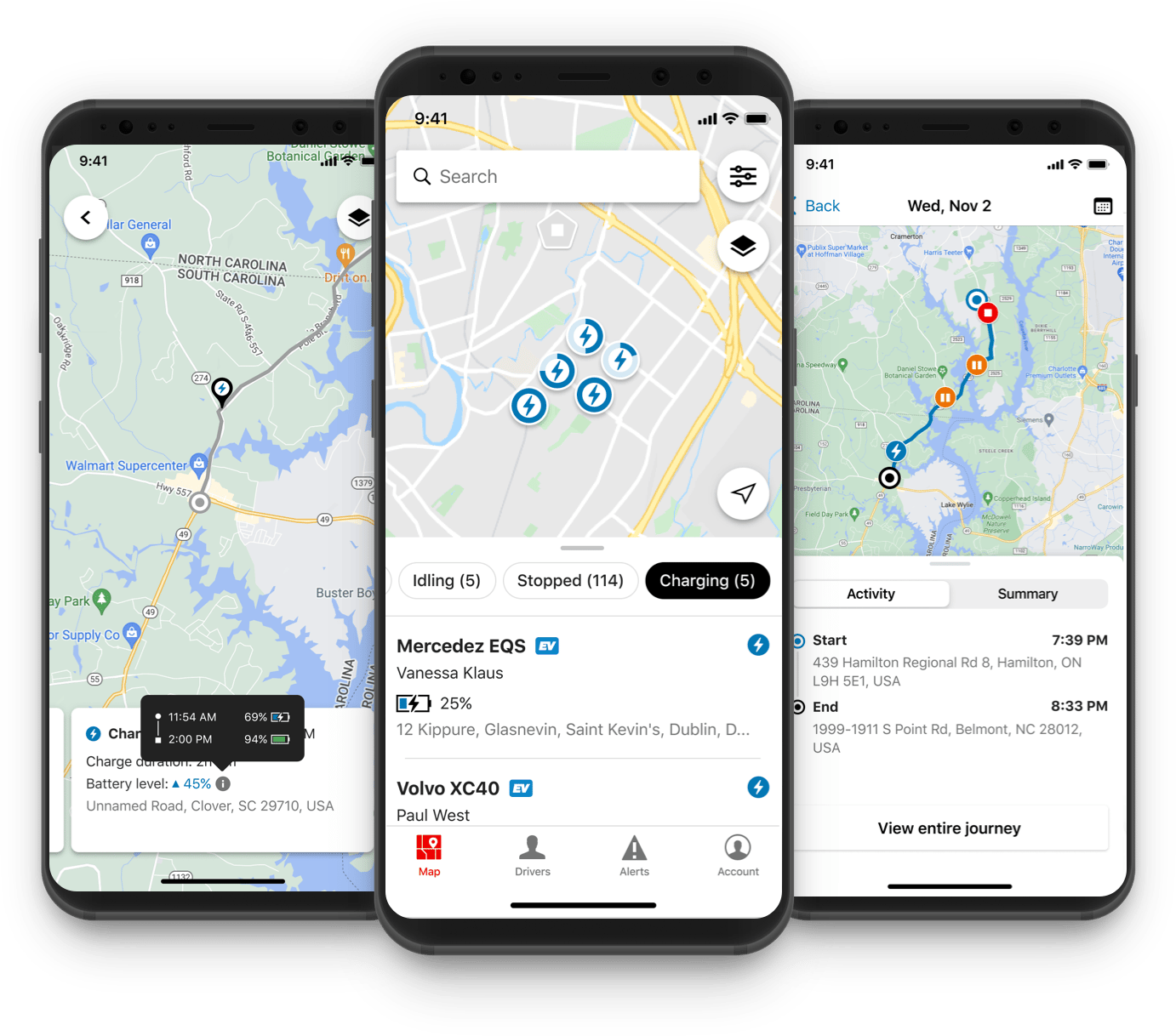
Access mixed fleet solutions to view electric vehicles, hybrids, and gas models side by side on a single map, at your desk or on the move.

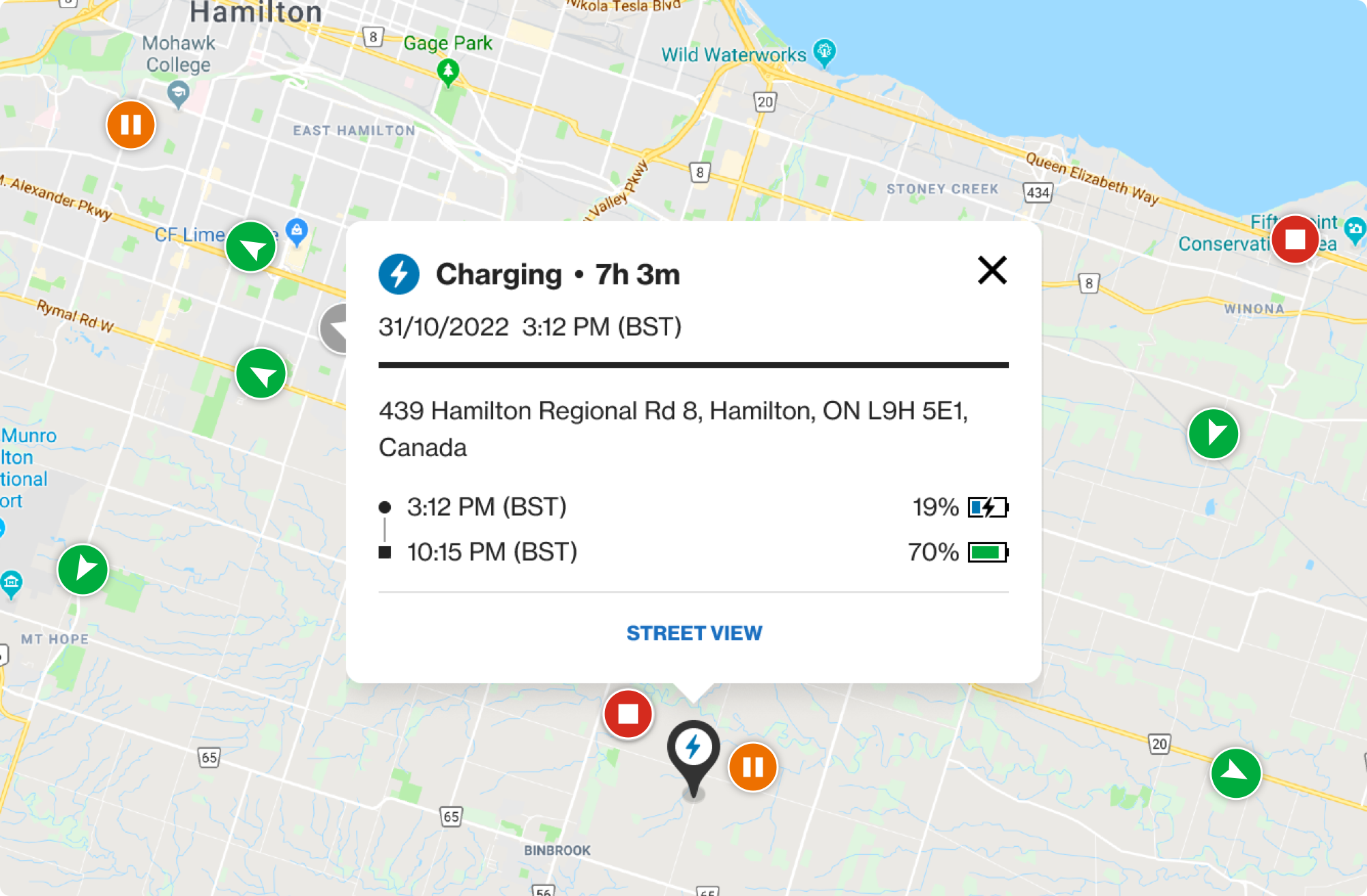
  • Use battery monitoring to track live locations, charge levels, and status on a Google-powered map
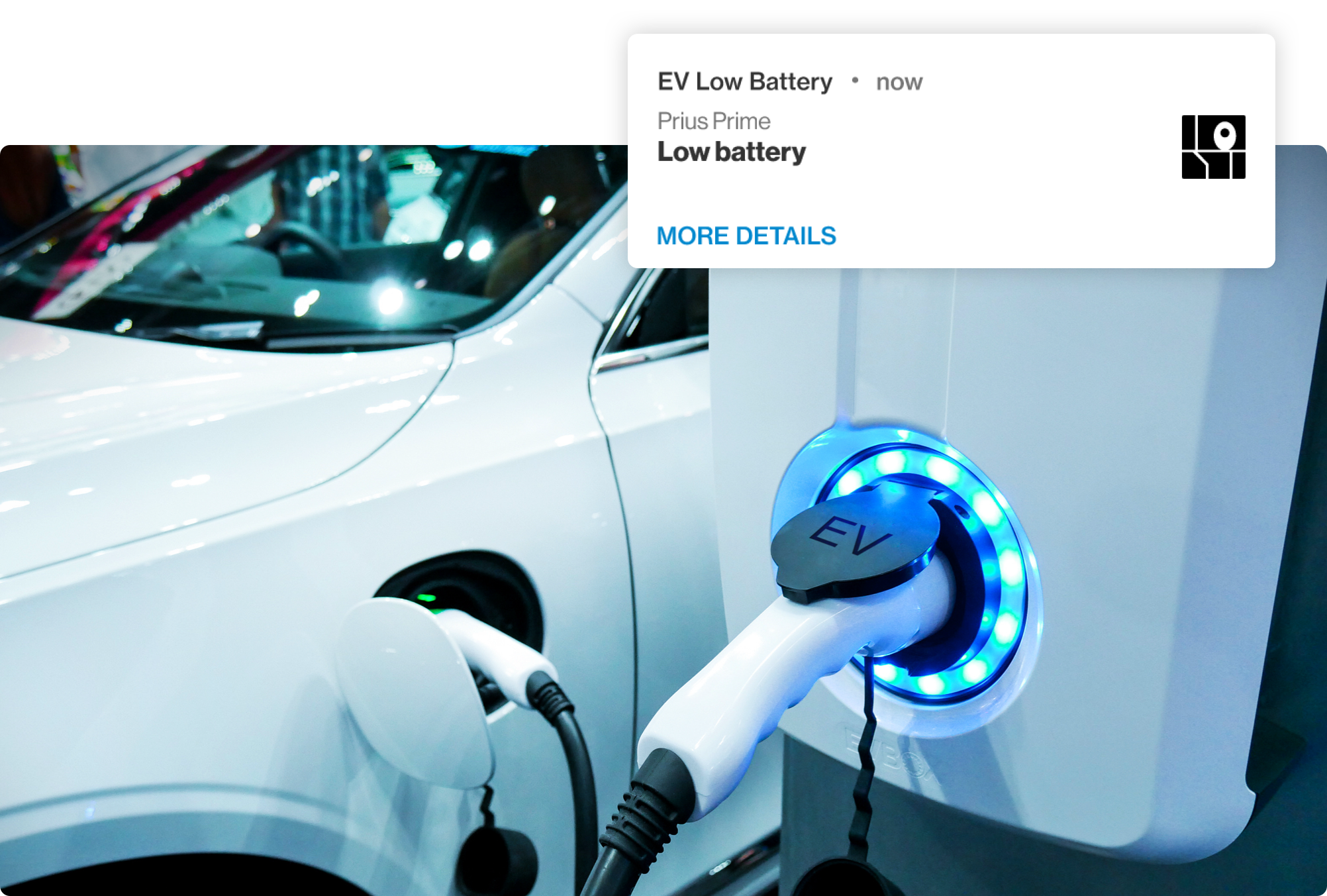
  • Set customizable low-battery alerts to receive instant notifications and proactively prevent fleet downtime
  • Verify which electric vehicles are plugged in and fully charged to confidently schedule your next dispatch
California Air Resources Board

Regulatory compliance

Meet emissions & DOT rules

Simplify state and federal environmental rules using real-time vehicle telemetry that reports directly to regulatory agencies and prepares you for audits.

  • Automate CARB compliance for heavy-duty fleets by sending real-time vehicle telemetry directly to state systems
  • Streamline DOT audits by pairing your fleet tracking with HOS and DVIR add-ons to automate driver reporting
  • Detect DTC fault codes early to address issues prior to DOT emissions testing
ev sustainability hq

Public sector compliance

Hit state green mandates

Our mixed-fleet telemetry gives agencies the reliable data needed to build custom compliance reports and track public funds.

  • Export raw mixed-fleet data to support internal reporting for state and federal environmental initiatives
  • Protect municipal budgets by tracking real-time vehicle utilization to eliminate wasteful engine idling patterns
  • Prioritize community safety on local roads using customizable driver coaching and habit monitoring

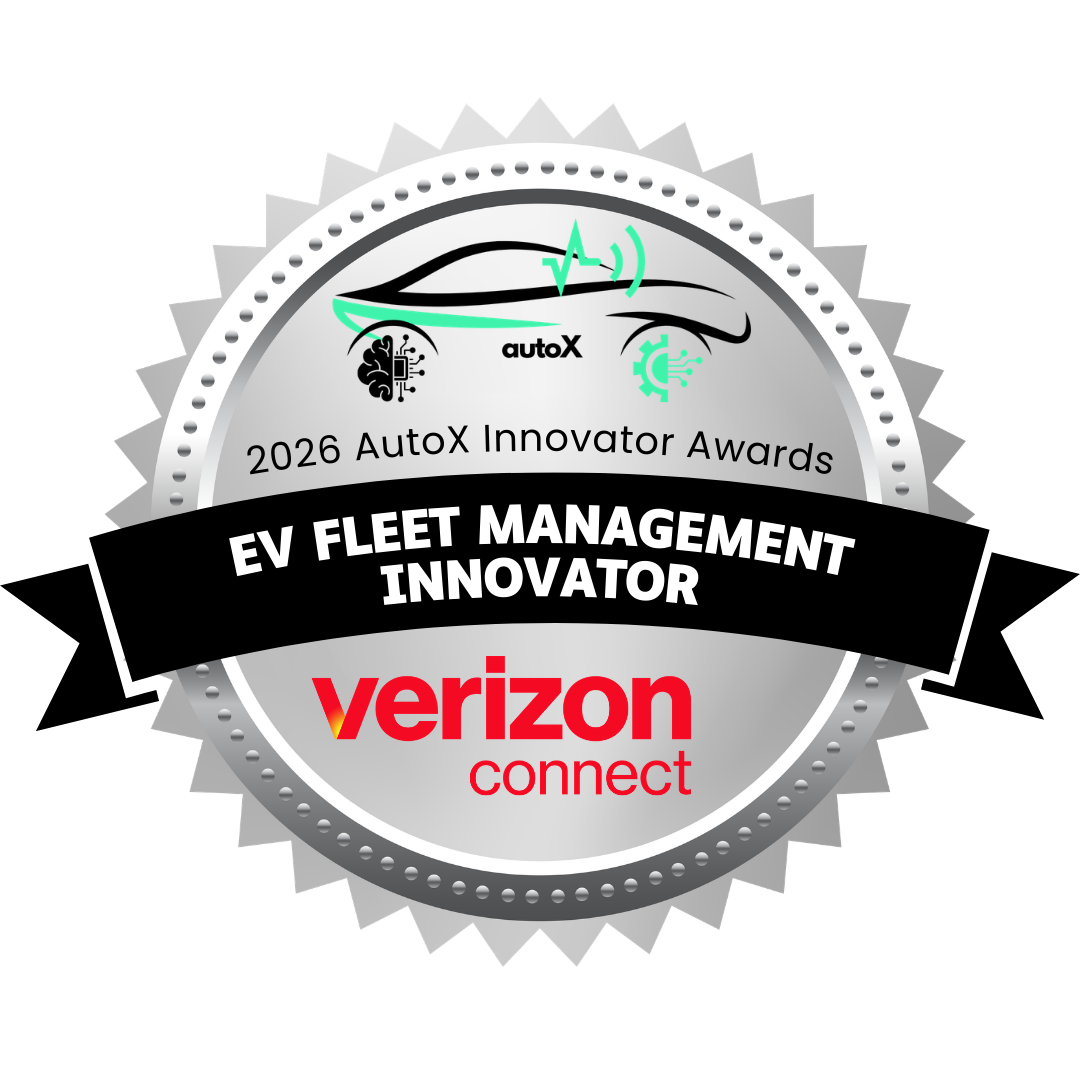
Our awards & recognition

Useful resources

Type=Playbook, Thin=False

eBook

5 ways fleet managers can prepare for electric vehicles

Type=Article, Thin=False

Blog

Electric vehicle fleet management features

Type=Article, Thin=False

Blog

Streamline fleet emissions compliance

Type=Playbook, Thin=False

eBook

5 ways fleet managers can prepare for electric vehicles

Type=Article, Thin=False

Blog

Electric vehicle fleet management features

Type=Article, Thin=False

Blog

Streamline fleet emissions compliance

Frequently asked questions


What is an EV Fleet?

An EV fleet is a group of electric vehicles owned or leased by a company, government agency, or organization. These vehicles run on electricity rather than gasoline or diesel and are used for daily work like making deliveries, carrying passengers, or running utility services.

How do you charge an EV fleet?

Charging an electric vehicle (EV) fleet involves setting up a mix of depot, workplace, or home chargers matched to vehicle schedules. It uses Level 2 or DC fast chargers managed by software to control electricity costs and ensure every vehicle is ready for its next shift.

How do you choose EVs for your fleet?

Choosing EVs for a fleet requires analyzing daily route predictability, range capabilities, total cost of ownership (TCO), and charging infrastructure needs. The best candidates are light-duty vehicles or urban delivery vans with fixed daily mileage well under maximum range that return to a central depot. Our EV suitability assessment can help you evaluate what EVs are right for your fleet.

How do you create an EV transition plan?

Creating an electric vehicle (EV) transition plan involves assessing current operations, analyzing data like daily mileage and parking time, calculating total costs, planning charger setups, and launching a small pilot test before scaling up across your organization.

How do you convert your fleet to EVs?

Converting a fleet to electric vehicles requires analyzing daily driving routes, planning depot or on-route charging infrastructure, and phasing in vehicle replacements. Start with a small pilot group of light-duty cars or vans that have predictable routes and long stationary dwell times, then scale up as you assess costs and performance.

How do you schedule EV fleet charging?

Scheduling EV fleet charging requires a centralized fleet management software platform to automate charging times around vehicle dwell windows, utility Time-of-Use (TOU) rates, and peak demand thresholds. Operators input shift schedules and vehicle state-of-charge requirements so the system safely delivers the required power before departure without triggering expensive grid demand spikes.

What is EV fleet management?

Electric vehicle (EV) fleet management is the process of overseeing, tracking, and optimizing a group of commercial electric vehicles. It handles daily operations like route planning, maintenance, and driver safety, while adding specialized tools to monitor battery health, manage charging station use, and control electricity costs.

What is EV fleet management software?

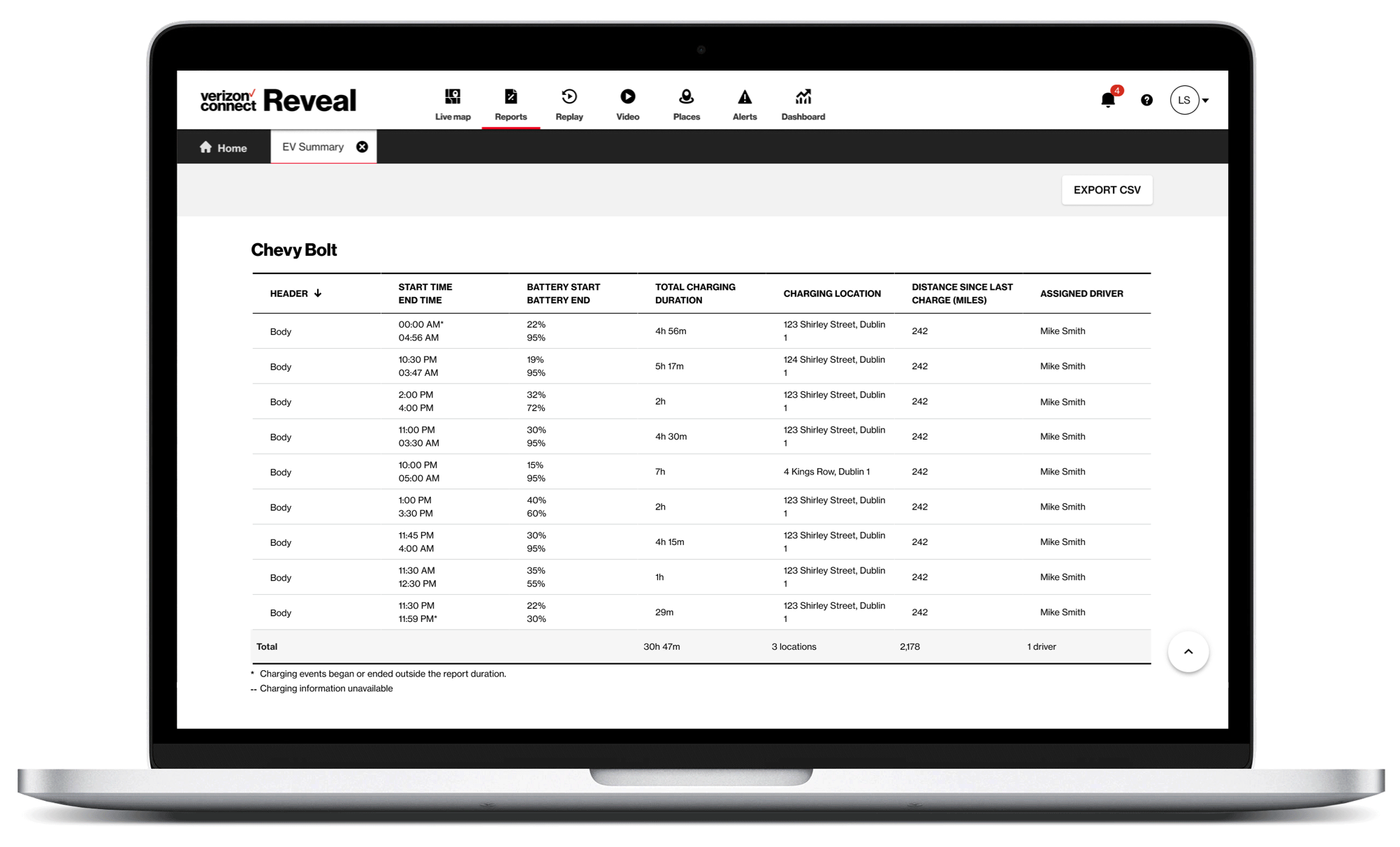
Electric vehicle (EV) fleet management software is a digital platform that helps businesses track, monitor, and optimize electric vehicles and their charging infrastructure from one central dashboard. It manages unique EV needs like EV suitability, battery percentage, EV reports including charging history, low-battery alerts, charging status, and live map/mobile app location visibility.

How can fleet managers optimize EV charging schedules?

Fleet managers optimize EV charging schedules by using Smart Charge Management (SCM) software to shift charging to off-peak hours, implementing dynamic load balancing to prevent grid overloads and high demand charges, and integrating telematics to align vehicle battery levels with daily route requirements.

How does dynamic power sharing benefit logistics fleet EV charging?

Dynamic power sharing (DPS) optimizes EV charging for logistics fleets by distributing available electricity in real time based on actual vehicle demand. Instead of oversizing electrical infrastructure for worst-case scenarios, DPS cuts installation costs, prevents grid overloads, and ensures trucks are fully charged for dispatch.