Guide to managing policies and programs for company vehicles
Learn how to build an effective company vehicle policy that protects drivers, lowers operating costs, and safeguards assets...
Read more 9 mins to read


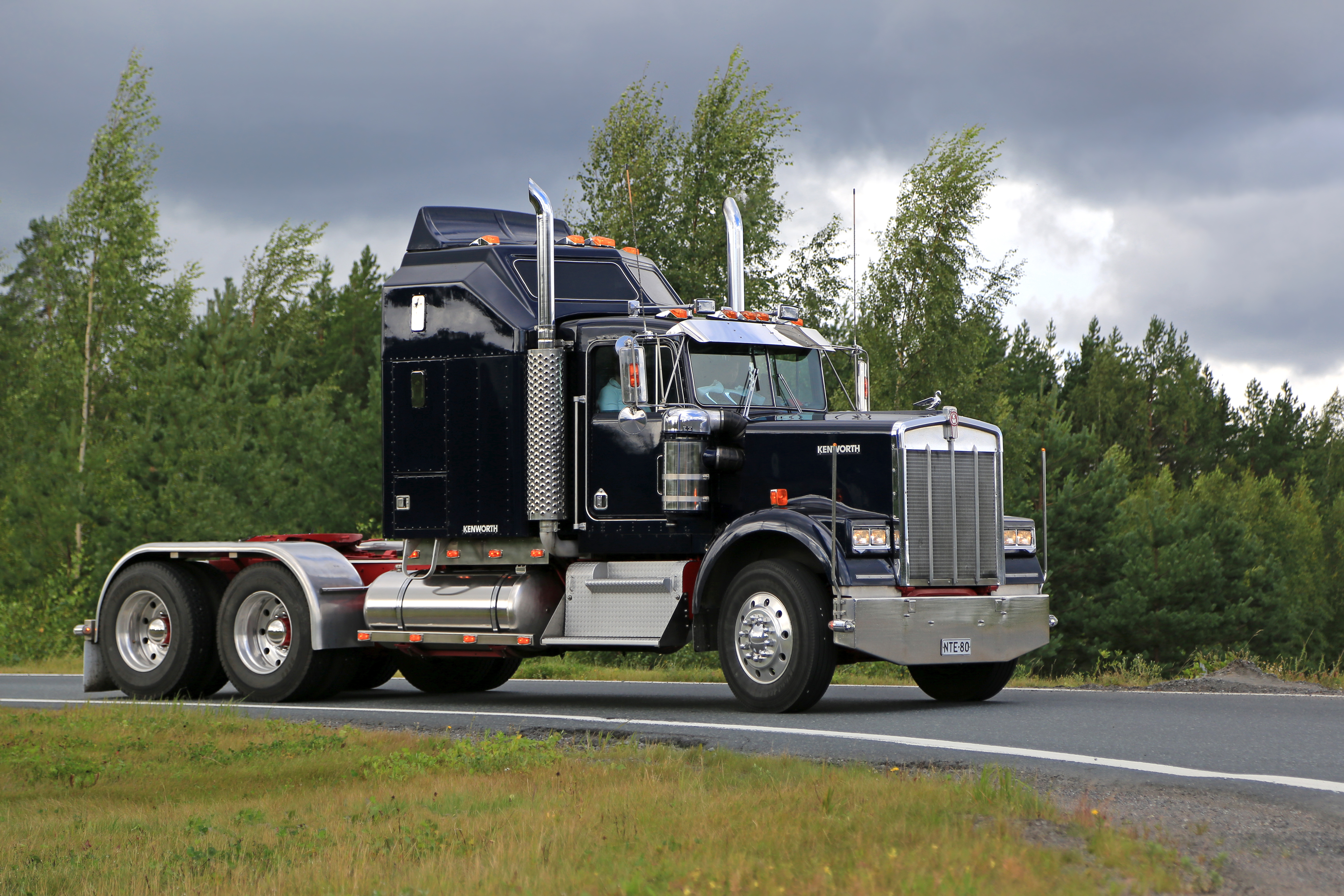
A bobtail truck is a semi-truck tractor operating without a trailer attached. In trucking, "bobtailing" typically happens when a driver is heading to pick up a new load, returning from a drop-off or repositioning a tractor between routes.
Without a trailer attached, the tractor's weight distribution, braking performance and handling all change significantly creating distinct safety and liability considerations for fleets.
For fleet managers, understanding what bobtailing is in trucking isn't just a matter of terminology. Transit miles without a load represent operational risk that's often harder to monitor than loaded runs.
Bobtailing can make a tractor more challenging to control than driving with a trailer attached. Without a trailer's weight over the rear of the tractor, the drive axles carry less load, reducing rear-wheel traction and changing how the vehicle responds to braking, acceleration and steering.
Those differences can become especially important on wet, icy or otherwise slick roads, as well as during sudden stops or evasive maneuvers. Drivers operating a bobtail truck may need to adjust their speed, following distance and braking technique to account for the tractor's lighter rear end and different handling characteristics.
Truck tractor braking systems are designed to perform with a loaded trailer, so removing that weight changes how the brakes perform. With less weight on the drive axles, the wheels can lock prematurely under hard braking, reducing stopping capability.1
Drivers should account for this reduced stopping capability when operating in bobtail mode. NHTSA research found that bobtail tractors had stopping distances approximately 122 feet longer, on average, than tractors connected to loaded trailers.1
For fleets, the compliance and insurance questions around bobtailing are just as important as the mechanical ones. Because a bobtail truck operation isn't hauling cargo, some regulatory and coverage rules shift, and fleet managers need to understand where those lines fall to keep drivers and operations protected.
Bobtailing does not require separate federal operating authority simply because a tractor is traveling without a trailer. However, driving bobtail does not exempt a carrier or vehicle from DOT registration, operating authority or other requirements that otherwise apply to its operation. Fleets should confirm the federal and state requirements that apply to their specific operations.
Weigh station requirements vary by state and by the specific regulations in place, but many still require commercial tractors to stop at weigh stations even when running without a trailer. Weigh stations aren't only checking cargo weight. They may also verify driver credentials, hours-of-service compliance and vehicle safety status.
Fleet managers should confirm requirements for the specific states their drivers operate in, since assuming a bobtailing tractor is exempt can create compliance risk.
Bobtail insurance provides liability coverage for a semi-tractor when it's being driven without a trailer and outside of dispatch for a motor carrier like when a driver is heading home or to a personal errand between loads. For fleet-owned tractors operating under the company's authority and dispatch, bobtail semi-truck insurance typically falls under the fleet's existing commercial auto liability policy rather than requiring separate bobtail coverage.
Additional bobtail insurance can be added as liability coverage, and the average cost is $360-$720 per year.2 Fleet managers should work directly with their insurance provider to confirm exactly when standard coverage applies versus when a gap might exist, since policies and definitions can vary by carrier.
Permit requirements for bobtail operation also vary by state and by the fleet's operating authority, so it's worth confirming with both a compliance specialist and your insurance provider that unladen miles are properly accounted for under your fleet's existing permits.
Because smooth, attentive driving becomes particularly important when a tractor is operating without a trailer, fleets can use video telematics to help identify risky behaviors before they contribute to an incident and coach drivers accordingly.
Technology like Verizon Connect's AI-powered dashcams can detect potentially unsafe driving behaviors and provide audible in-cab alerts, giving drivers an opportunity to correct their behavior in real time. For example, in-cab alerts have been associated with a 50% reduction in tailgating, 30% reduction in distraction and 20% reduction in solid-line departures.3
For fleet managers, that means video telematics can provide another layer of visibility and coaching during bobtail trips, when maintaining appropriate speed, following distance and driver attention can be especially important.
Just how helpful is technology when it comes to fleet driver safety? According to the Fleet Technology Trends Report, companies implementing fleet management software see accident costs reduced by 19%.
Since bobtail driving behaves differently than loaded driving, generic, one-size-fits-all coaching isn't enough. The most effective fleet safety programs use data to identify which drivers need extra attention during unladen miles and why.
Predictive data makes this possible. Repeat risky driving events are a strong warning sign: drivers with recurring incidents are nearly twice as likely to be involved in a crash, and drivers with more than two major tailgating events see their crash likelihood increase by 230%.4
For a fleet running regular bobtail routes, that kind of pattern is exactly what managers want to catch early before reduced traction and unpredictable braking turn a bad habit into a collision.
This is where personalized coaching, powered by telematics, makes a measurable difference. Rather than treating every driver the same, fleet managers can use individual driver scorecards to see, for example, that one driver brakes harshly more often than the rest of the fleet, or that another has a pattern of speeding specifically during unladen transit. That context lets managers target coaching conversations to the behaviors and drivers that need it.
Turning scorecard metrics into safer driving habits requires a structured coaching framework. Download our free eBook: The Road to Fleet Safety to discover practical steps for using telematics data to coach drivers effectively, improve retention, and build a lasting safety culture.
AI dashcams already deliver alerts for speeding, tailgating, harsh driving and distraction, while cloud AI automatically categorizes all the HD video so managers can quickly review the events that matter.
Generative AI in fleet management is the natural next step, surfacing insights across organizational data and pointing managers to where action is needed. This helps fleets get a clear view and proactively manage safety and efficiency that once took hours to uncover. Operational Insights from Verizon Connect is designed to save time while improving decision quality.
With proactive takeaways, managers can:
Driver and vehicle safety don't happen by accident. Download our free eBook: Advanced fleet management technology solutions for transportation to see how integrated telematics, AI video, and operational insights work together to protect your drivers and optimize your fleet.
Fleets that run bobtail miles should be aware of the added safety and liability risks that come with unladen transit, but the right technology can help close that gap. For B.A.M. Trucking, after adding Verizon Connect to their fleet, owner Brad Medford saw an immediate business impact, including a $200,000 reduction in their annual insurance premium.
When one of their drivers was falsely accused of causing an accident, video footage proved otherwise, and the claim was dropped not once, but three times. As office manager Cindy Medford put it, "I cannot imagine our trucks not having Verizon Connect. It protects the driver, and it protects the company."
That same visibility and protection extends to bobtail operation. With AI-powered dashcams, real-time in-cab alerts, and personalized driver coaching, fleet managers can catch risky habits during unladen transit before they become accidents, and have the evidence to protect their drivers and their business if something does go wrong.
See how Verizon Connect can help your fleet achieve similar results. Schedule a demo today.
A bobtail truck looks like a standard semi-tractor — cab, engine, drive axles — with no trailer attached. Without a trailer connected, the fifth wheel (the coupling device that normally secures the trailer) sits exposed, and the tractor appears noticeably shorter and lighter than when pulling a full load.
This changed profile is also part of why the weight distribution shifts so heavily toward the front axle, which becomes a central safety concern.
A bobtail truck is also commonly referred to as a bobtail tractor or bobtail semi truck. All three terms describe the same scenario: a semi-tractor traveling without its trailer. Fleets may also hear drivers or dispatchers use "bobtailing" as the verb form to describe the act of driving in this configuration.
The term "bobtail" refers to the tractor's short appearance without a trailer, similar to an animal with a short or docked tail. Think animals that naturally have or are bred for short tails, such as bobcats, rabbits or certain dogs.
Bobtailing means driving a semi-truck tractor without a trailer attached. Deadheading means driving a truck with an empty trailer attached. In both cases, the truck isn't carrying freight, but the vehicle configuration is different.
That difference matters because a bobtail tractor has no trailer weight over its drive axles, which changes its traction, braking and handling. A deadheading truck still has the weight and physical characteristics of an empty trailer behind it.
A bobtail is simply the tractor portion of a semi-truck operating without its trailer. A standard semi setup combines the tractor with an attached trailer, whether that trailer is loaded or empty.
1 "Federal Motor Vehicle Safety Standards; Stopping Distance Requirements for Vehicles Equipped With Air Brake Systems," National Highway Traffic Safety Administration (NHTSA)
2 "What is Bobtail Insurance?" FreightWaves
3 Verizon Connect aggregated customer data video analysis of the number of events per engine hour with/without in-cab alerts on 30,000 vehicles
4 Verizon Connect aggregated customer data video analysis of the number of events per 1000 km with/without in-cab alerts

Tags: Safety, Performance & Coaching, Cost control
Learn how to build an effective company vehicle policy that protects drivers, lowers operating costs, and safeguards assets...
Read moreLearn more about driver qualification (DQ) file management and how to ensure your fleet stays compliant and avoids costly...
Read moreExplore the DOT audit checklist and learn how to prepare for and pass a DOT safety audit, avoid costly compliance violations...
Read moreStaying compliant with fuel tax regulations is essential for any fleet operating across state or national lines...
Read more