How advanced driver assistance systems support safer fleets
Discover how commercial ADAS and DMS technologies combine AI dashcams, real-time in-cab alerts, and video analytics to...
Read more 7 mins to read


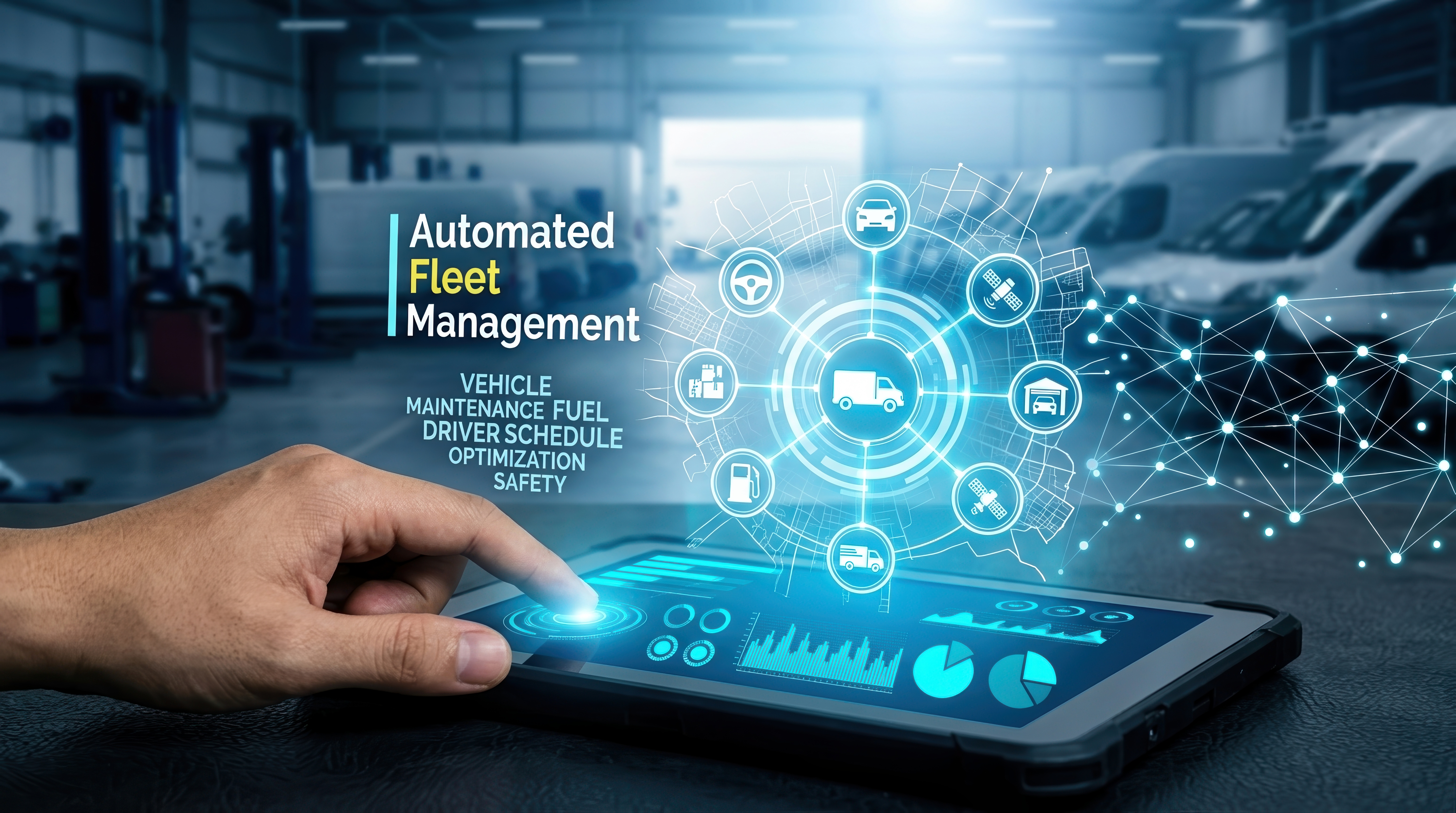
What is an automated fleet management system? Fundamentally, it’s a connected software and hardware platform that uses GPS tracking, internet of things (IoT) sensors and cloud-based analytics to automatically collect, analyze and act on fleet data.
The foundation of fleet management automation is vehicle data. Instead of relying on manual spreadsheets, paper logs or vehicle checks, fleet managers can use one centralized platform to continuously monitor vehicle location, performance, maintenance needs, driver behavior and other operational metrics.
Telematics hardware, such as a plug-in vehicle data device (VDD) or an OEM-installed telematics connection, captures information directly from fleet vehicles and transmits it to a cloud-based fleet management platform. That data can include GPS location, mileage, engine status, diagnostic trouble codes, fuel use, idling, harsh driving events and other vehicle or driver activity.
Cloud analytics and AI can then turn this continuous stream of data into automated workflows and actionable insights that save fleets time and money. For example, automated fleet management can:
The distinction between fleet automation systems vs. traditional fleet management software is not simply whether a platform offers GPS tracking. It is how quickly fleet data can be translated into action. Automated fleet management uses connected data, configurable rules and AI-powered analytics to trigger alerts, reports and workflows with less hands-on intervention than traditional fleet management.
| Capability | Traditional fleet management software | Automated fleet management systems |
| Vehicle tracking | Displays GPS location and historical vehicle activity for managers to review | Uses location data to automatically trigger workflows or notifications based on predefined conditions |
| Maintenance management | Stores maintenance records and schedules that managers monitor | Uses mileage, engine hours or vehicle data to automatically trigger service reminders and maintenance alerts |
| Driver safety | Provides driving-event data for managers to review after the fact | Automatically identifies risky driving events and can use AI-enabled video to classify events and help prioritize coaching |
| Alerts | Requires managers to regularly check dashboards or reports for issues | Sends near-real-time notifications to managers and can send audible, in-cab alerts in real time to drivers |
| Reporting | Requires users to pull, review and distribute reports | Uses scheduled reporting to automatically deliver selected reports to designated stakeholders |
| Dispatch and routing | Managers manually review vehicle locations and communicate assignments | Uses connected data to help dispatchers identify the closest vehicles to a specific location with distance and estimated travel times to support quick response and routing |
| Decision-making | Managers interpret large volumes of fleet data and determine which issues require attention | Analytics and AI help flag exceptions, trends and high-priority events so managers can prioritize |
This shift can become especially important as a fleet grows. A manager overseeing 10 vehicles may be able to manually review individual records and alerts. At 50, 100 or several hundred vehicles, the volume of data can make that impossible without fleet management automation.
Download the free ebook What is telematics? to learn how telematics technology collects and connects fleet information, and how those insights can help improve day-to-day decision-making.
Automated fleet management systems can create ROI by reducing the manual work and time required to manage a fleet and helping managers identify costly behaviors and operational issues sooner. Automated reports, alerts and insights can help managers focus on behaviors that may be increasing operating costs, such as excessive idling, speeding, unnecessary mileage and unauthorized off-hours vehicle use.
That visibility can translate into measurable improvements. A Verizon Connect analysis found that fleets actively using automated reports and alerts achieved a 48.6% median reduction in speeding and a 15.9% median reduction in idling time.¹
When evaluating different systems, fleets can look at how automated capabilities translate into savings across several areas:
For many fleets, those savings can translate into a relatively short payback period. According to the 2026 Fleet Technology Trends Report, 44% of fleets using video solutions reported achieving positive ROI in less than one year and 74% reported improved driver safety, while 64% said video technology improved their protection against false claims.²
When calculating expected ROI, fleets should compare the full cost of the system against measurable changes in fuel consumption, maintenance expenses, downtime, claims, productivity and administrative workload.
Want to calculate your potential savings? Use our ROI calculator.
Automated fleet management can also save time on compliance tasks by replacing fragmented, manual processes with more consistent workflows.
For fleets subject to DOT and other regulatory requirements, automation can help replace fragmented, manual compliance processes with more consistent workflows. Integrated ELD tools can automatically track hours of service and provide access to driver logs, HOS status, violation alerts and electronic DVIRs.
For fleets looking at how to automate motor vehicle record (MVR) checks, partner integrations can extend those capabilities further. For example, Verizon Connect integrations can combine telematics data with motor vehicle records (MVR), CSA scores, licensing and other driver-risk information, helping fleets reduce manual data reconciliation and maintain a more complete view of driver risk.
Automation is also expanding into emissions compliance. Eligible fleets can use Reveal telematics data to remotely transmit vehicle emissions information for California’s Clean Truck Check program, reducing the need for physical emissions testing.
Together, these tools can help fleets automate MVR checks and fleet management compliance workflows.
Sonoco Recycling had limited visibility into truck locations, routing relied heavily on experienced drivers’ institutional knowledge, and customer status updates often required multiple phone calls between sales teams, plant managers and drivers.
With Verizon Connect, Sonoco gained near real-time visibility into vehicle locations, routes and driver activity. The company can now analyze idle time, optimize routes and use hours-of-service data to better plan driver assignments. Route planning also became significantly less time-intensive: one plant manager reported reducing the time required to set routes from several hours a day to less than 45 minutes for an entire month.
Those efficiencies have translated into measurable savings and greater fleet capacity. Sonoco reduced idle time enough to save more than $100,000 in fuel costs alone, while increasing average material collected per route from 10-12 tons to 17-18 tons. The company also reported saving at least $60,000 in damage repairs by using driver photos to document trailer conditions.
Ready to start streamlining your operations? Download Navigating fleet management: a buyers guide to evaluate automation features, software costs and key vendor criteria.
¹ Verizon Connect aggregated customer data of long-term active users (1+ year) of Reveal reports and alerts

Tags: Safety, Data & Analytics, Productivity & Efficiency, Revenue & ROI, Cost control, ELD & Compliance, Vehicle Maintenance, Routing
Discover how commercial ADAS and DMS technologies combine AI dashcams, real-time in-cab alerts, and video analytics to...
Read moreDiscover how AI fleet management transforms operations with cost savings, preventive maintenance and smarter safety programs.
Read moreLearn how AI and predictive analytics help fleets improve safety, efficiency and productivity,
Read moreLearn how AI dash cams can help to monitor seatbelt compliance and distracted driving to improve fleet safety and reduce...
Read more