Curb weight vs gross weight: What's the difference?
Discover the differences between curb weight and gross weight in commercial vehicles. Learn how understanding these metrics...
Read more 12 mins to read


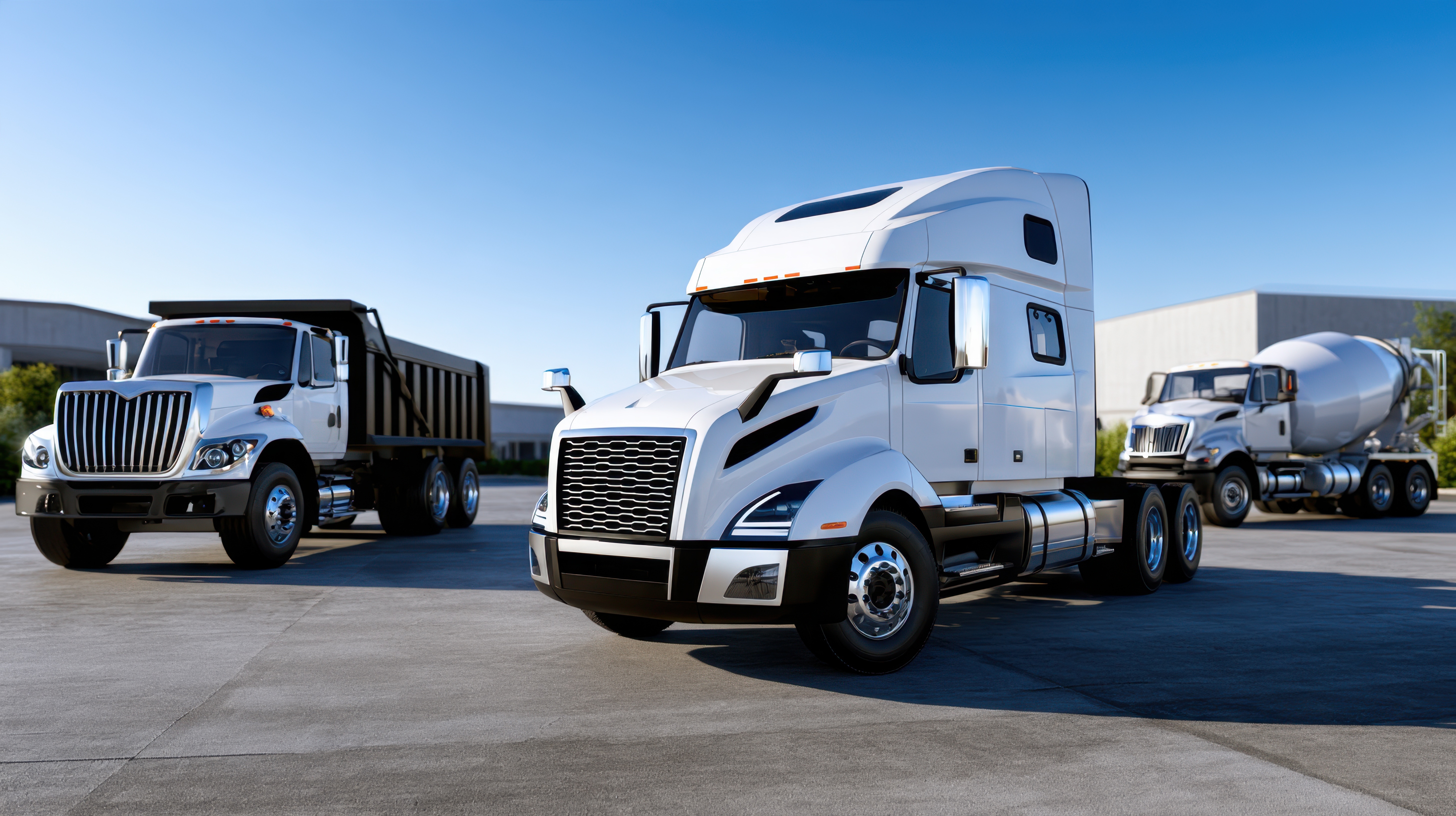
Every truck purchase has more to consider than just vehicle size and model. Fuel costs, licensing requirements and insurance premiums depend on which class a truck falls into.
Before diving into specific truck types, it helps to understand the classification system that the entire industry and regulatory agencies build on.
The Federal Highway Administration (FHWA) groups vehicles by axle configuration and number of units, while regulatory weight classes (Class 1 through Class 8) determine licensing and safety requirements.1 The Federal Motor Carrier Safety Administration (FMCSA) defines a Commercial Motor Vehicle (CMV) under 49 CFR 390.5 as any vehicle operating in interstate commerce to transport property or passengers with a gross vehicle weight rating (GVWR) of 10,001 pounds or more, among other criteria.2
It’s important to know that the GVWR differs from the Commercial Driver's License (CDL) threshold. Class 3 (medium-duty) begins at the 10,001-pound threshold, which is also when a vehicle operating in interstate commerce may meet the federal definition of a commercial motor vehicle (CMV). A CDL is generally required for a single vehicle with a GVWR of 26,001 pounds or more, or for combination vehicles that meet similar weight thresholds.3
Commercial trucks fall into three broad weight categories: light duty, medium duty and heavy duty. These groupings roll up the eight federal GVWR classes into simpler operational tiers.
Getting the weight class wrong in either direction can create problems. Buy heavier than you need and you're paying for capacity, fuel and CDL drivers you don't use. Buy lighter than you need and you're overloading the vehicle, which shortens its life and creates safety liabilities.
Different truck types serve different purposes and industry-specific functions, and the naming conventions often reflect function rather than the weight class:
Tractor-trailers, semi-trucks and transport trucks: handle long-haul freight
Light-duty trucks are the entry point for most commercial fleets. These vehicles cover Class 1 and Class 2, with GVWRs generally topping out around 10,000 pounds, and they're the vehicles most contractors, tradespeople and small business owners encounter first.
Because light trucks span so many configurations, the same GVWR range can include a landscaper's pickup, a courier's cargo van and an electrician's service truck. Choosing the wrong build (say, a standard pickup where a service body would hold equipment more securely) still counts as a light-duty purchase, but it can leave a crew working around a vehicle that doesn't match the job.
For small businesses, a little goes a long way. Download our operational efficiency guide for small business fleets to learn strategies for reducing costs.
Light-duty trucks are where electrification is moving quickly, largely because their routes tend to be shorter and more predictable than medium- or heavy-duty operations. The challenge for most fleets is deciding which specific vehicles in a mixed fleet are good candidates for electrification.
This is where route-level telematics data changes the calculation. Verizon Connect's EV Suitability Tool analyzed route data from over 90,000 commercial vehicles across 622 million miles and found:
A suitability tool analyzes usage data from your current vehicles to determine whether EVs are a good fit for your fleet. By using a suitability tool, you can get the information you need to make confident purchasing decisions, including seeing which vehicles could be replaced by EVs, as well as your expected fuel costs savings and carbon reduction.
That level of detail matters because two trucks with identical GVWR classifications can have completely different EV suitability depending on their routes, idle time and loads. For fleet managers weighing a replacement cycle, that kind of data turns an educated guess into a documented business case.
Choosing the right truck types is only part of the equation. Once your fleet is mapped out, the next challenge is finding the fleet management solution that fits it. Download our free eBook: Choosing a Telematics Partner for Modern Fleets to learn the fundamental questions to ask before selecting a provider.
Medium-duty trucks span roughly 10,001 to 26,000 pounds, covering Classes 3 through 6. Many are straight trucks, with the cab and cargo or work body mounted on the same chassis rather than a separate trailer. This broad category includes box trucks, flatbeds, delivery trucks and many service and work trucks.
It's also where the licensing picture gets more complicated. Some medium-duty trucks stay well under the 26,001-pound CDL threshold, while others near the top of Class 6 approach it, which means fleet operators need to check GVWR on a truck-by-truck basis.
The variety that makes medium-duty trucks so useful can also make them hard to manage. A fleet running one-ton pickups, box trucks, flatbeds, and delivery vehicles side by side often ends up with fragmented oversight, different maintenance schedules and inconsistent utilization tracking.
Verizon Connect gives fleet operators visibility across every truck classification, from light-duty service vans to heavy-duty rigs. For medium-duty fleets specifically, that means tracking a box truck's delivery route and a flatbed's job site status in the same dashboard, rather than piecing together updates from separate systems or driver check-ins.
The system also integrates with vehicle health monitoring, streaming real-time diagnostic trouble codes and engine fault data across diverse OEMs, including direct integrations with Ford and GM built-in hardware. For a mixed medium-duty fleet, that means maintenance issues on a box truck and a delivery van surface through the same alerts.
The result is fewer unmonitored maintenance gaps, better visibility into idle time and a clearer picture of which vehicles in a multi-use fleet are actually pulling their weight.
J&M Contracting manages a mixed fleet of 26 vehicles and 40 assets (including light-duty trucks, heavy-duty trucks and backhoes) and achieved 100% recovery of stolen equipment along with lower insurance premiums using Verizon Connect.
Heavy-duty trucks start at 26,001 pounds GVWR and cover Class 7 and Class 8, the segment most people picture when they hear "commercial truck." These are the vehicles that require a CDL, undergo the most rigorous maintenance and inspection schedules and carry the highest insurance costs in the fleet.
Heavy-duty trucks carry the high safety stakes in a fleet, both because of their size and because an incident involving a loaded semi can have more serious consequences than one involving a smaller vehicle.
That's where in-cab video and driver monitoring have become a standard part of heavy-duty fleet safety programs rather than an optional add-on. Verizon Connect's AI-powered dashcams use driver-facing and road-facing cameras to detect risky behaviors including tailgating, distraction and fatigue and deliver in-cab audio alerts so drivers can adjust their driving habits.
Aggregated Verizon Connect customer data shows that tailgating, phone use, distraction, fatigue and smoking incidents dropped by 30% to 60% after fleets enabled this technology. Fatigue-related events specifically saw a 50% reduction, dropping from 0.06 to 0.03 events per hour.6
Load monitoring adds another layer of protection for heavy-duty operations. Asset tracking solutions, including powered trackers with up to five years of battery life and non-powered trackers rated for 10 or more years, lets fleets monitor trailers, tankers and mounted equipment alongside the trucks that haul them.
For a fleet running dump trucks, reefers and semis side by side, that means one dashboard showing vehicle location, driver behavior and asset status.
Matching truck class to the work at hand affects fuel costs, licensing, insurance and how well your fleet performs day to day. Whether you're running a handful of light-duty service vans or a mixed fleet of different truck types, the right classification is only the starting point. Managing that fleet well over time is where real savings and safety improvements come from.
Choosing the right trucks is only the start. Download our free eBook: 10 steps for implementing the best GPS fleet tracking system to learn how to plan your rollout, secure driver buy-in, and get maximum value from your fleet technology.
1 The Federal Highway Administration, FHWA Vehicle Types
3 The Federal Motor Carrier Safety Administration, Drivers
4 The U.S. Department of Energy, Alternative Fuels Data Center, Vehicle Weight Classes and Categories
5 Verizon Connect aggregated customer data analysis of the routes of over 92,000 light and medium duty ICE commercial vehicles, covering a combined 622 million miles
6 Verizon Connect aggregated customer data video analysis of the number of events per engine hour with/without in-cab alerts on 30,000 vehicles

Tags: Productivity & Efficiency, Fuel cost management, Fleet utilization, ELD & Compliance, Cost control
Discover the differences between curb weight and gross weight in commercial vehicles. Learn how understanding these metrics...
Read moreLearn about Gross Vehicle Weight Rating (GVWR), what it is, and how it contributes to lower maintenance costs, safer roads...
Read moreLearn what payload capacity is, how to calculate GVWR minus curb weight, how tongue weight counts, and how fleets prevent...
Read moreLearn more about what an anti-lock braking system (ABS) is, and how ABS enhances fleet safety, reduces accidents, and...
Read more