Your guide to diagnostic trouble codes (DTCs)
Learn more about diagnostic trouble codes, or DTC codes, how to read them, and how to avoid vehicle issues through DTC...
Read more 8 mins to read


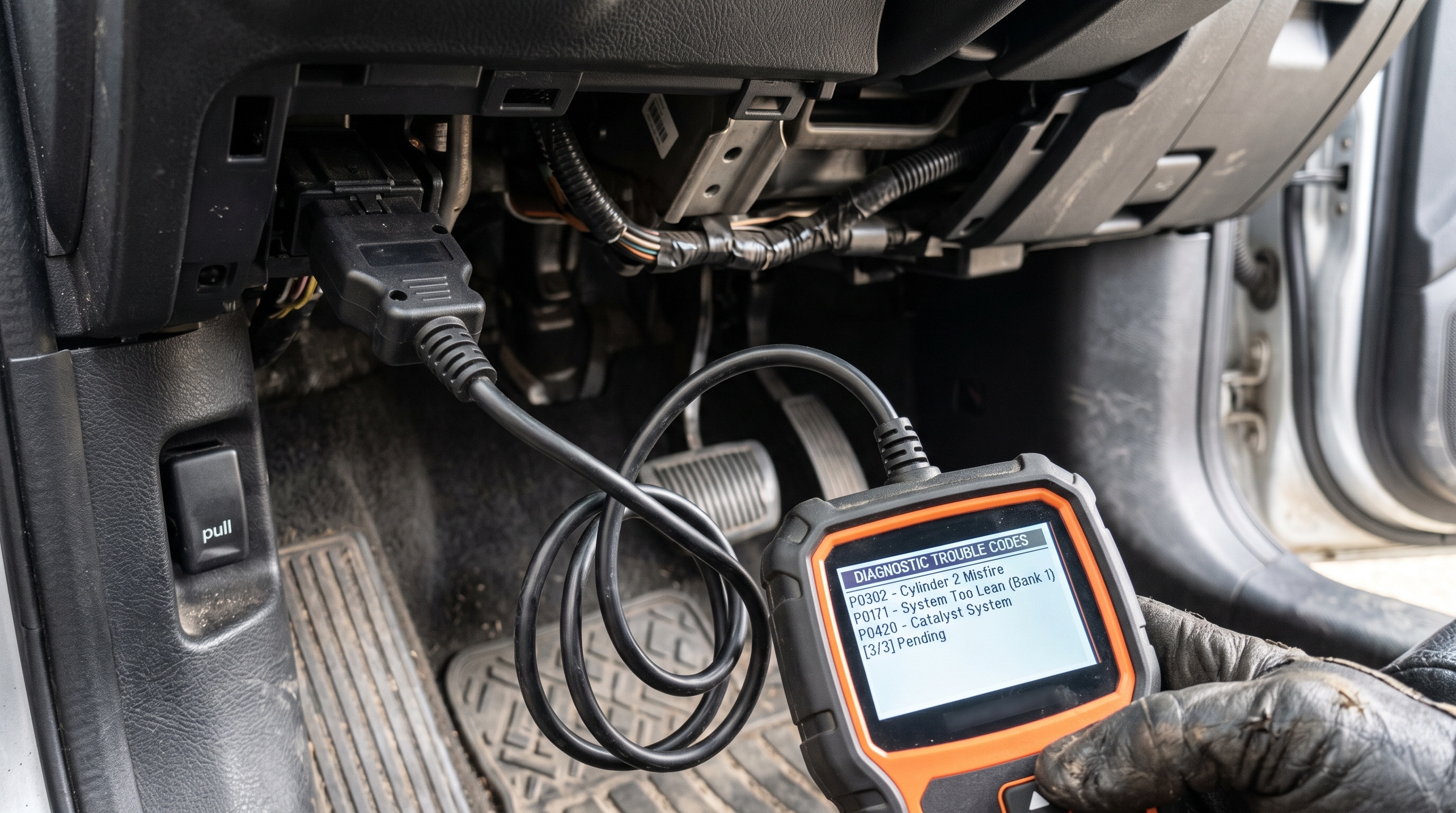
On-board diagnostics (OBD) gives drivers and technicians important information about vehicle health, but fleets can get even more value from that data. Modern OBD-II systems, commonly also called OBD2, can connect with telematics to help fleet managers monitor diagnostic trouble codes (DTCs), identify maintenance needs and manage vehicle health across the fleet.
The OBD system is a vehicle’s built-in system for monitoring engine performance, emissions and other key operating conditions. Using sensors throughout the vehicle, the system communicates with the engine control unit (ECU), continuously evaluating data such as fuel mixture, exhaust performance, engine temperature and other indicators of vehicle health.
When the ECU detects a problem, it can generate a diagnostic trouble code (DTC) and, depending on the issue, activate a dashboard warning such as a check engine light. Technicians then access those diagnostic codes through the vehicle’s OBD port using an OBD-II code reader, OBD-II code scanner or another compatible diagnostic tool.
Early OBD-I systems, introduced by individual automakers, varied significantly in their connectors, communication methods and diagnostic codes. The introduction of OBD-II created a more standardized approach, giving technicians a common way to access emissions and vehicle diagnostic information across most light-duty vehicles.
The OBD on-board diagnostics port is the physical connection point used to access diagnostic information stored by the vehicle’s on-board computer. On OBD-II-equipped vehicles, this connection uses diagnostic equipment and telematics devices to communicate with the vehicle.
OBD-II code readers use standardized OBD communication protocols to exchange that information. Depending on the vehicle, these may include protocols such as SAE J1850, ISO 9141-2, ISO 14230 or CAN-based ISO 15765 communication.1
The OBD-II port location is typically beneath the dashboard on the driver’s side, often near the steering column, footwell or lower dash panel. In some vehicles, it may sit behind a small access cover or slightly farther toward the center console.
Keeping your vehicles in top condition is essential for business success. Download our free eBook: Fleet Management Best Practices to discover proven ways telematics can automate preventive maintenance, reduce unscheduled downtime, and lower repair costs.
An OBD-II code reader is a useful tool for diagnosing an individual vehicle, but it typically requires someone to physically connect the scanner to the vehicle and review the results. Remote telematics diagnostics take a different approach.
A compatible telematics device can remain connected to the vehicle and transmit diagnostic information to a centralized fleet management platform, allowing maintenance teams to monitor vehicle health without waiting for a driver to return to the shop.
To use a typical OBD car diagnostic tool, a technician locates the vehicle’s OBD-II port and connects the scanner. Depending on the tool and vehicle, the ignition may then need to be switched to the appropriate position so the scanner can communicate with the vehicle’s electronic control modules.
DTCs help identify the system where a fault has been detected, such as the engine, emissions system or powertrain. More advanced OBD-II scanners may also display live vehicle data, pending codes, freeze-frame information or manufacturer-specific diagnostics.
The best tool for reading OBD-II codes depends on the use case. A basic handheld code reader may be sufficient for identifying common DTCs on a single vehicle, while professional scan tools can provide deeper diagnostic capabilities.
Yes. Commercial telematics devices can use the OBD-II port to automatically collect engine diagnostic information without requiring a technician to physically scan each vehicle. For example, a Vehicle Data Device (VDD) from Verizon Connect connects to compatible light-duty vehicle OBD-II ports and continuously communicates vehicle data to the telematics system.
When the vehicle generates a DTC, that information can be transmitted remotely to the fleet management platform, giving maintenance teams visibility into potential engine or emissions issues while vehicles are still in the field.
On average, GPS fleet tracking helped users reduce maintenance costs by 15%. 43% of GPS fleet tracking users said the technology helped them improve vehicle maintenance and achieve their maintenance goals. Find out more.
For fleets, an OBD on-board diagnostic system can provide much more value than identifying why a check engine light came on. When vehicle diagnostic data is connected to a fleet management platform, maintenance teams can monitor vehicle health across the fleet, receive alerts about developing issues and use that information to make more preventive maintenance decisions.
Instead of treating each OBD device as an isolated diagnostic tool, connected telematics brings vehicle health information into the same environment used to manage maintenance, utilization, driver behavior and compliance. This can help fleets move from diagnosing problems after they occur to identifying conditions that may contribute to downtime, higher repair costs or unnecessary vehicle wear.
Telematics can surface fault codes related to certain parts such as powertrains, batteries, writing and mechanical, electrical and emissions systems. Maintenance teams can then use alerts and service schedules to address developing issues before they contribute to an unexpected breakdown.
But DTCs are inherently reactive. They indicate when the failure has already occurred. The real opportunity for fleets lies in developing preventive maintenance workflows that reduce how often DTCs appear. With this approach to preventive maintenance, fleets can:
And reducing behaviors that place unnecessary stress on vehicles can help limit wear and tear before a DTC or more serious maintenance issue develops. Verizon Connect usage data found that active Reveal users leveraging automated reports and alerts achieved a 15.9% median reduction in idling time and a 48.6% median reduction in speeding.2
OBD-II devices also play an important role in vehicle emissions monitoring. The U.S. Environmental Protection Agency (EPA) notes that OBD technology provides technicians with timely emissions information and helps vehicle owners identify maintenance needs, supporting state and local vehicle inspection and maintenance programs designed to control emissions and improve air quality.3
Because many emissions problems produce DTCs or other OBD system data, connected telematics can help fleets identify vehicles that may need attention before they undergo required testing. Verizon Connect’s Emissions System Report, for example, shows emissions-related faults, DTCs and check engine light activity so fleet managers can identify systems that may need repair before an emissions test.
For qualifying California fleets, telematics can go a step further by transmitting required vehicle data directly to regulators. Verizon Connect is an approved California Air Resources Board (CARB) Clean Truck Check telematics provider, allowing covered heavy-duty fleets operating in California to remotely transmit required telematics data to CARB in lieu of applicable physical emissions testing.
California government fleets may also participate in the Bureau of Automotive Repair (BAR) Continuous Testing Program (CTP) pilot.4 For enrolled vehicles, telematics devices continuously transmit emissions-related OBD data for BAR to evaluate, eliminating the need for the standard biennial Smog Check station visit while helping identify emissions problems sooner. Verizon Connect is currently listed by BAR as a participating CTP telematics provider.
For fleets managing regulatory requirements across large numbers of vehicles, automated data collection and transmission can reduce manual administrative work while integrating emissions compliance with everyday fleet operations.
For the Township of Lakewood, New Jersey, moving from an outdated radio system to Verizon Connect helped improve fleet visibility, maintenance scheduling and vehicle uptime.
The Public Works Department uses Verizon Connect and a partner integration that automatically updates vehicle mileage every 24 hours, giving the team more accurate data for scheduling maintenance. Director of public works Phil Roux says the system "makes scheduling maintenance a lot easier with accurate miles" and helps the department quickly locate vehicles if a breakdown occurs.
Roux also expects the improved maintenance visibility to help extend vehicle life. Combined with driver alerts for behaviors such as speeding and fast acceleration, the system gives Lakewood a more proactive way to manage both vehicle condition and day-to-day fleet operations.
Ready to move from reactive DTC troubleshooting to total fleet visibility? Dive deeper into proactive service scheduling with our comprehensive Fleet Maintenance Guide, or download 10 Steps for Choosing GPS Fleet Tracking Systems to see how plug-in telematics can automate diagnostics across your entire operation.
1 SAE International, J1979_202505 E/E Diagnostic Test Modes
2 Verizon Connect aggregated customer data of long-term active users (1+ year) of Reveal reports and alerts
3 U.S. Environmental Protection Agency, Vehicle Emissions On-Board Diagnostics (OBD)
4 Bureau of Automotive Repair, Continuous Testing Program Pilot and Enrollment

Tags: Data & Analytics, Productivity & Efficiency, Cost control, ELD & Compliance, Vehicle Maintenance
Learn more about diagnostic trouble codes, or DTC codes, how to read them, and how to avoid vehicle issues through DTC...
Read moreLearn more about tire management and how to use TPMS data to monitor tire pressure and health to avoid costly repairs...
Read moreLearn how to read odometers, track mileage for reporting, and lower costs with Verizon Connect ECM odometer integration...
Read moreLearn about common fleet compliance regulations and how tech can help companies meet these requirements while improving...
Read more