Top benefits of AI video telematics for fleets
Explore benefits of AI video telematics and learn how to use AI video to reduce accidents, lower fleet costs, and improve...
Read moreCase study


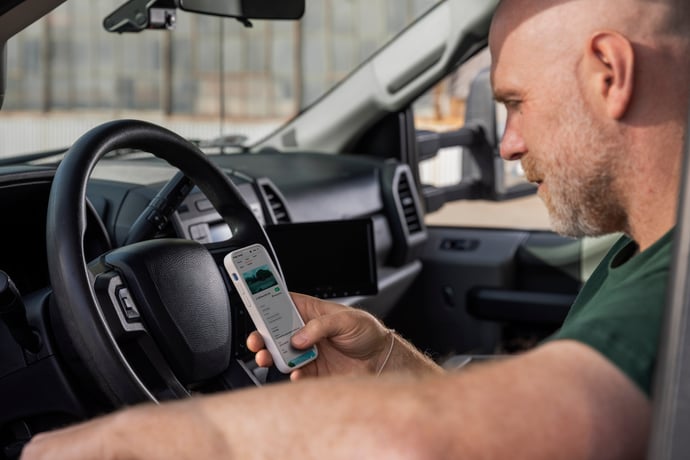
A well-established pest control operator serving a fast-growing metropolitan area faced a familiar operational strain: rapid business growth was outdating their manual tracking methods. Operating a growing fleet of take-home vehicles, company leadership needed a modern solution to streamline field scheduling, automate routine maintenance, and protect drivers from false insurance claims on busy roads.
By equipping their fleet with integrated GPS tracking software and dual-facing AI dashcams, the company brought real-time visibility to daily field operations. The transition helped office staff confirm job completions instantly, protected drivers against staged accident fraud, and established a proactive, safety-first driving culture.
A surge in commercial and residential construction across the region created unprecedented demand for routine service calls and pre-construction treatments. To keep pace with expanding service routes, the business steadily brought on new technicians, each entrusted with a company-issued vehicle.
However, as the fleet expanded, relying on paper records and manual checks presented several operational hurdles:
Manual fleet administration: Fleet managers relied on handwritten notes and physical window stickers to track oil changes and licensing updates, creating administrative backlogs.
Service verification bottlenecks: Office staff had to interrupt field workers with phone calls just to verify arrival times or confirm whether a scheduled service call was finished.
Risk and liability exposure: Branded commercial vehicles are frequent targets for staged accidents and false liability claims.
Public perception and driver safety: Company trucks serve as mobile billboards. Management needed a consistent way to monitor driving habits—like excessive speeding or sudden braking—to ensure their brand was represented safely in local neighborhoods.
"When you're out on the road, you're a driving billboard for this company. Being seen in these neighborhoods with a standard for safety is what upholds our reputation."
— Regional Field Manager
To replace paper logs and gain total visibility over daily field routes, the company deployed Verizon Connect Reveal alongside integrated dual-facing AI Dashcams.
This connected system provided office managers with a centralized view of daily operations and vehicle health:
Live mapping & route replay: Real-time location tracking allowed office teams to confirm job site arrivals, provide accurate ETAs, and answer customer inquiries without calling field workers.
Automated maintenance alerts: Digital tracking monitors engine health and service intervals, automatically alerting managers when routine servicing or licensing updates are due.
AI-powered safety coaching: Integrated dashcams detect unsafe driving events—such as sudden braking or speeding trends—capturing video context to help coach drivers before accidents happen.
Live route tracking eliminated the need for back-and-forth phone calls between dispatchers and field staff. Office teams can reference route history in seconds, confirming completed visits and providing immediate, confident responses to inquiring customers.
High-definition AI dashcams provided objective video proof during disputed road incidents, giving leadership the evidence needed to protect their drivers and business against staged accident fraud.
"It has happened where people attempted to claim our driver was at fault when they actually slammed on their brakes in front of us. Commercial vehicles can be seen as an insurance payout, but the video footage gives us the clear truth and protects our team."
— Branch Operations Lead
Rather than reacting to accidents after they occur, managers review fleet-wide driving trends to identify minor issues early. Using scorecards and video highlights, leadership addresses recurring habits like minor speeding during regular team meetings to reinforce safe habits.
"We haven't had major issues, thank goodness. For us, the technology is all about saying, 'Hey, let's correct this habit together before it turns into a real problem on the road.'"
— Field Safety Manager
Operational goal | Technology used | Business impact |
Verify service delivery | Live mapping & route replay | Confirms job completion in seconds without interrupting field workers |
Protect against liability | Dual-facing AI dashcams | Objective video evidence that refutes false insurance claims |
Improve driver safety | Automated scorecards & alerts | Data-driven coaching that reinforces safe driving habits across the team |
Automate maintenance | Diagnostic alerts | Eliminates manual paper tracking and reduces vehicle downtime |
Tags: Cost control, Dispatching & Scheduling, Field management, Vehicle Maintenance
Explore benefits of AI video telematics and learn how to use AI video to reduce accidents, lower fleet costs, and improve...
Read moreLearn how to detect and prevent unauthorized vehicle use and theft using fleet management technologies like geofencing...
Read moreExplore the fleet manager’s guide to fleet maintenance management and learn how to reduce unplanned downtime and avoid...
Read moreLearn about the impact of hard braking and hard acceleration on fleet safety and fuel costs, and how to monitor harsh...
Read more